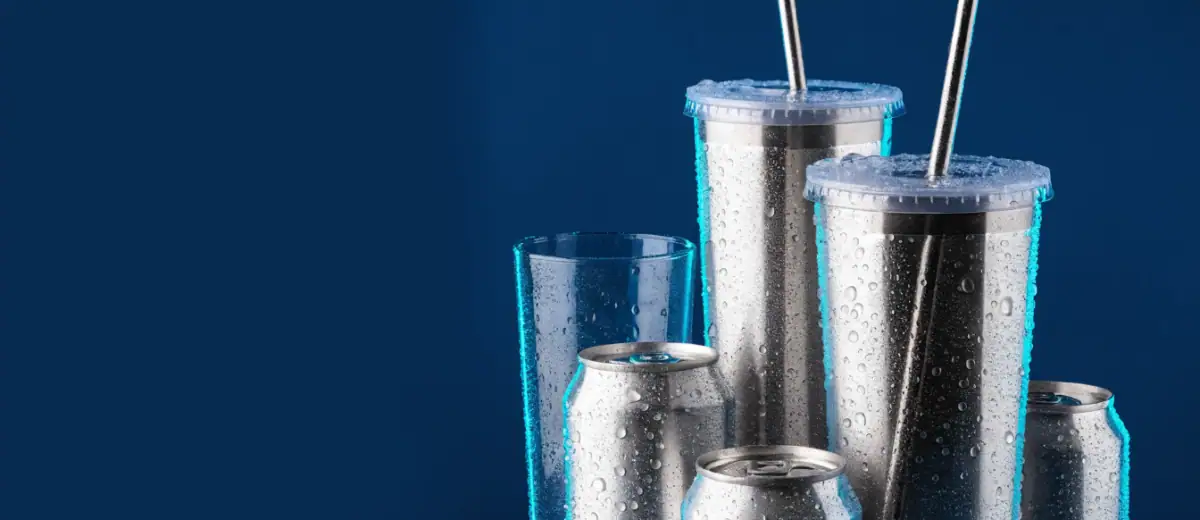
A product package arrives in the letterbox. The recipient turns it over, briefly holds their smartphone to it and immediately lands on a personalised welcome page with a product video, warranty registration and a discount code for their next order. No QR code scanning, no app download. Simply tap, done. That is exactly what Smart Packaging with NFC is: the transformation of a passive package into an active digital touchpoint.
What is Smart Packaging exactly?
Smart Packaging means that a physical package can do more than protect and inform. It communicates actively with the recipient. The technology behind it is, in most cases, NFC (Near Field Communication). This is a contactless radio technology that transmits data over a few centimetres. In practice: you hold your smartphone up to an NFC sticker on the packaging, and a website, video or form opens instantly.
No scanning, no focusing with the camera. Simply tap. The difference compared to a QR code is greater than it sounds: NFC achieves 3 to 5 times higher interaction rates than QR codes at the same placement in practical tests. This is due to the frictionless experience without intermediate steps.
Beyond NFC, there are other Smart Packaging approaches: QR codes (already used by 94% of all marketers), AR markers (Augmented Reality overlays via the camera) and temperature-sensitive inks. For smart promotional products and phygital marketing, however, NFC is the most mature and easiest-to-use technology.
How does a standard package become a digital touchpoint?
The implementation is technically simpler than many expect. An NFC sticker starts from CHF 0.80 and can be applied to almost any surface or integrated directly into the packaging. The chip itself requires no battery. It is activated by the electromagnetic field of the smartphone when you bring the device close.
The three steps from sticker to experience
First: the NFC chip is linked to a URL. This can be a product page, a landing page or a digital document. Second: the user holds an NFC-enabled smartphone to the packaging. Over 85% of all smartphones worldwide are NFC-enabled in 2025, iPhones from version 7 onwards, mid-range Android devices since approximately 2017. Third: the content opens automatically in the browser. No app download, no registration required.
The decisive advantage over classic promotional products: the digital content can be updated at any time. The chip stays the same, but you can update the linked page without reproducing the packaging. A product launch today, a loyalty programme tomorrow, a seasonal offer the day after. All via the same chip.
What can be shown on a Smart Packaging landing page?
The possibilities are broader than many companies initially think:
- Product videos and usage instructions
- Warranty registration directly after purchase
- Recipes and usage suggestions (particularly relevant for food and cosmetics)
- Sustainability information and certificates
- Discount codes for the next order
- Review requests
- Loyalty programmes and bonus points
- Personalised welcome messages depending on the purchase channel
Each of these touchpoints is measurable. You can see when, where and how often the NFC chip was read, how long someone stayed on the page and what actions they took. This is a fundamental difference from printed packaging, which returns no data.
Which industries are already using Smart Packaging?
Smart Packaging is no longer a niche topic. The NFC packaging market is estimated at USD 5.87 billion in 2025 and is expected to grow to USD 19.22 billion by 2034. That corresponds to an annual growth rate of 14.13%. Four industries are particularly active.
Cosmetics and Beauty
Premium cosmetics brands use NFC labels and Smart Packaging to store authenticity certificates. The customer taps the bottle, immediately sees whether the product is genuine and lands on the manufacturer’s page with an application video. Refill programmes are handled directly via the chip. Customer loyalty increases and returns due to product counterfeiting decrease.
Food and Beverages
Wineries in France and Spain have been linking their bottles to digital tasting notes, pairing suggestions and ordering options for years. Craft breweries use NFC on the can to share the brewery’s story and upcoming events. This extends brand engagement beyond the moment of purchase without overloading the packaging with text.
Pharma and Healthcare
For the pharmaceutical industry, Smart Packaging is primarily a safety tool. NFC chips on medication packaging enable authenticity verification, display package inserts in the desired language and send reminders about dosage schedules. In Northern Europe, particularly in Sweden and Finland, this is already the market standard for prescription medications.
Electronics and Retail
Consumer electronics manufacturers use NFC on packaging for product registration. The detour via printed warranty cards is eliminated. The buyer taps the device, registers in 30 seconds and receives onboarding materials directly to their smartphone. The registration rate increases significantly compared to the classic online form.
Smart Packaging as part of the phygital strategy
Smart Packaging works best when it is not conceived as an isolated project, but as part of a consistent phygital marketing strategy. Phygital combines physical and digital experiences in a way that mutually reinforces them. Customers who interact via phygital channels demonstrably spend 30% more than purely in-store customers. Their loyalty is 23% higher.
For businesses, this means concretely: the packaging is not the end of the customer journey. It is a new starting point. The moment the product is in the customer’s hands becomes the most active marketing moment. And all of this costs from CHF 1.20 per unit with NFC labels.
This can be combined directly with other smart promotional products. An NFC pen from CHF 4.50 at a trade fair, an NFC table display from CHF 8.00 at the point of sale, plus a Smart Packaging solution for the product itself: all three touchpoints send the user into the same ecosystem. You control the journey, measure every step and optimise continuously.
Those who want to explore smart promotional products in more depth will find concrete solutions on the Smart Giveaway product overview, ranging from NFC stickers to complete Smart Packaging concepts.
What sets Smart Packaging apart from classic promotional products
The most common objection to Smart Packaging is: “That must be more expensive than regular packaging.” At first glance, that is true. On closer inspection, it is not.
Classic packaging with printed content returns no data. You do not know whether anyone filled in the warranty card, whether the product video on YouTube was watched, or whether the discount code is even known to customers. Smart Packaging makes exactly these questions answerable.
Imagine: 10,000 products shipped with NFC labels. 3,200 taps in the first 30 days. You can see which regions the interactions come from, at what time of day, and which content receives the most clicks. This enables data-driven decisions that are simply not possible with printed packaging.
Added to this is flexibility: if an offer changes, a product recall becomes necessary or a new campaign launches, you update the linked content. The packaging stays the same. You save printing costs and respond in real time.
Frequently asked questions about Smart Packaging with NFC
Does NFC work on every type of packaging?
NFC stickers work on cardboard, plastic, glass and most other materials. The only exception is metal. Metallic surfaces interfere with the NFC signal. For metal packaging, there are special “on-metal” chips that are slightly more expensive. For standard product packaging made of cardboard or plastic, there are no restrictions.
Does the customer need a special app to read the NFC chip?
No. NFC promotional products in packaging open content directly in the smartphone’s browser. On iPhones from iPhone 7 onwards, this works natively without an app. On Android devices, NFC has been activated as standard on mid-range and premium devices since approximately 2017. Over 85% of all smartphones worldwide are NFC-enabled in 2025.
How much does it cost to get started with Smart Packaging?
NFC stickers start from CHF 0.80, NFC labels from CHF 1.20. These are the per-unit costs at appropriate quantities. The additional effort for configuration (which URL is linked) and the landing page is a one-time investment. After that, all chips can be centrally managed and updated. For an initial pilot, we recommend testing 500 to 1,000 units and measuring tap rates over 4 weeks. A detailed overview of NFC promotional product costs and ROI can be found in our comparison article.
Can I change the linked content after the fact?
Yes, that is one of the greatest advantages. The NFC chip itself remains unchanged on the packaging. What it links to is controlled via a dashboard. You can swap content at any time without printing new packaging. This is particularly valuable for seasonal campaigns or when product information changes.
What data can I track with Smart Packaging?
You can see the number of taps, the time and region of the interaction, dwell time on the landing page, completion rate for forms (warranty registration, newsletter sign-up), and which content such as videos or links was clicked. The average dwell time on NFC-triggered pages is 2 to 4 minutes, significantly above the 8 seconds typical of display advertising.
If you would like to know what Smart Packaging could look like specifically for your packaging and product, you can reach the Smart Giveaway team directly via the contact form. Request a free consultation now.
