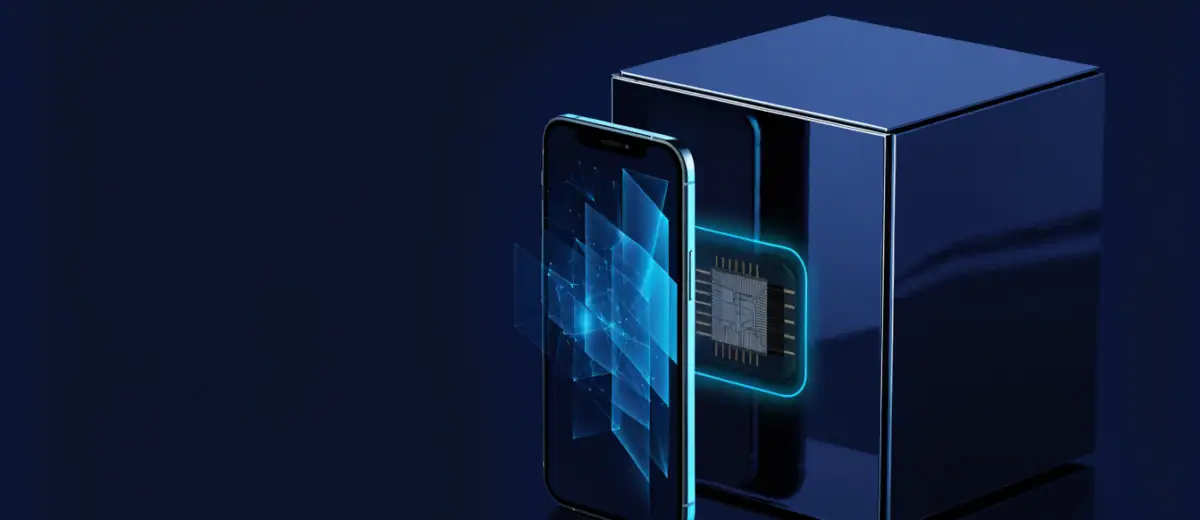
Smart packaging is no longer a future topic in 2026. It is the present. The global smart packaging market is estimated at around 27.88 billion USD in 2026 and is expected to grow to 45.51 billion USD by 2034, with a CAGR of 6.32% (according to MarketDataForecast, 2026). NFC is growing twice as fast: the NFC-enabled packaging market is expanding at a CAGR of 12.47% and is projected to reach 16.27 billion USD by 2034 (Fortune Business Insights, 2026). What this means for your marketing: every package, every giveaway, every promotional item becomes a digital touchpoint. And with the EU Digital Product Passport, this will become a compliance requirement for many industries from 2026 onwards.
Why Smart Packaging Becomes a Turning Point in 2026
Three forces are converging simultaneously in 2026. First: WebAR technology is mature enough for the mass market. Second: third-party cookies are disappearing, and brands need new ways to access direct customer data. Third: the EU Digital Product Passport makes phygital packaging a legal requirement for many industries.
The numbers show that adoption is already underway. 61% of global consumers interact at least sometimes with connected packaging such as QR codes on food packaging (Innova Market Insights). Global launches featuring QR codes grew at a CAGR of 28% between 2021 and 2025. And 92.3% of industry experts say connected packaging will become even more important in the next 12 months (Appetite Creative, 2026).
For brands with promotional materials, product packaging or giveaways, this means: those who invest now are building a lead that latecomers will struggle to close. Julie Winwood, Design and Innovation Director at MM Packaging, sums it up well: “Packaging is increasingly becoming a communication channel that provides transparency while simultaneously strengthening brand trust.”
The Three Core Technologies Compared
Smart packaging works through different technologies. Each has its strengths. The choice depends on budget, target audience and intended use.
QR Codes: Affordable and Universal
QR codes dominate the connected packaging market. The reasons are simple: low production costs, no hardware integration required, and every smartphone can read them. Currently, 47.1% of smart packaging users are already using a combined QR and NFC solution (Appetite Creative, 2026). This shows that QR is not an either/or alternative to NFC, but often the entry point.
The limitation remains: the user must actively open the camera and scan. That is a barrier NFC does not have. For 2026, QR is still a solid starting point, especially if you want to activate WebAR experiences directly in the browser.
NFC Tags: The Premium Experience
NFC stands for Near Field Communication. Simply put: you hold your smartphone up to the product and your landing page, loyalty programme or product passport opens instantly. No app download required. One tap is all it takes.
NFC is growing at a CAGR of 12.47%, making it the fastest-growing segment within smart packaging (Fortune Business Insights, 2026). The customer engagement segment is growing the most strongly at 11.4% for the period 2025 to 2034. Cost barriers are also falling noticeably: roll-to-roll printing of conductive inks on flexible plastic substrates has reduced the cost per tag by around 60% since 2024 and pushed passive RFID below the 0.05 USD threshold that retailers consider viable for item-level tracking.
A concrete practical example: cosmetics brands are using NFC-enabled bottles to combine anti-counterfeiting protection with interactive tutorials. During a foundation launch conducted in 2025, personalised shade tips were delivered directly to users’ smartphones.
AR Triggers: For Immersive Experiences
Augmented reality via packaging was long dependent on apps and therefore user-unfriendly. Studies show that app download requirements reduce engagement rates by 60 to 80% compared to download-free alternatives. By 2026, WebAR has established itself as the standard. The user scans a QR code or taps an NFC tag and experiences AR directly in the browser.
The numbers demonstrate the impact. At the global debut of the Jack Daniel’s AR experience, the application attracted over 30,000 users within one month, who together experienced over 110,000 AR sessions with an average session time of 5:42 minutes (Brown-Forman, 2025). Connected packaging campaigns achieve average scan rates of 14%. For comparison: the click-through rate for digital advertising is 0.01%.
EU Digital Product Passport: Smart Packaging Becomes Law
This is the most important structural development for packaging and promotional materials this decade. The EU Central DPP Registry launches with full ESPR application on 19 July 2026. The mandatory product passport for industrial and electric vehicle batteries over 2 kWh follows from February 2027.
The timeline for further sectors is clear: in the course of 2027, the first wave of mandatory DPPs will arrive for textiles and fashion, consumer electronics, tyres and detergents. Between 2028 and 2030, additional sectors will follow, potentially including packaging and plastics in general. Requirements for product categories will be introduced through product-specific delegated acts.
What does this mean concretely for your product? The DPP will be attached to every product in the form of an NFC chip, QR code or RFID tag and linked to a cloud-based data passport that complies with ISO/IEC 15459 for global traceability. When a regulator, customs official or consumer scans it, they see exactly what is relevant to them: consumers see repair instructions, regulators see compliance certificates, recyclers see disassembly instructions.
Important for everyone supplying the EU market: all products in the relevant categories must have a corresponding DPP regardless of their country of manufacture. This affects every company exporting goods to Europe. Those who build the infrastructure in 2026 will have a lead in 2027 that others will have to pay dearly to close.
Phygital Marketing: Packaging as a Data Strategy
With the end of third-party cookies, brands face a structural challenge: how do they obtain direct customer data? Smart packaging is the answer. Every tap on an NFC tag, every QR scan is a voluntary data point. Direct. First-party. Without detours through platforms.
Jenny Stanley, founder of Appetite Creative, describes the shift this way: “Food and beverage brands are revolutionising the traditional concept of packaging by turning it into an interactive media channel that reaches consumers at the point of maximum engagement.” (FoodNavigator, September 2025)
The numbers demonstrate the potential. More than 63% of brands use smart packaging to improve traceability, which improves shelf-life monitoring by around 35% and reduces product loss in global supply chains by approximately 28%. Documented revenue increases from connected packaging campaigns reach up to 30%, without additional media spend.
Concrete campaign figures illustrate the range: the KDD back-to-school campaign with gamification generated 191,000 game plays and over 100,000 scans in three months. Goodday Cultured Milk achieved 218,000 unique visitors and more than 13,000 scans with serialised codes for instant prizes (Appetite Creative, 2026).
Product authentication and anti-counterfeiting protection account for 38.5% of the NFC packaging market in 2026 (Coherent MI, 2026). The same principle applies to smart promotional materials and NFC giveaways: an NFC-equipped promotional item is not just a gift. It is a permanent digital touchpoint that delivers data for as long as it is used. You can see how this works in practice at trade fair appearances in our article on NFC giveaways for events and trade fairs.
Sustainability and Smart Packaging: No Contradiction
A common misconception: smart packaging means more electronics and therefore more waste. Developments in 2025 and 2026 show the opposite. Sustainability trends have driven 40% growth in biodegradable and compostable smart packaging materials.
Technologies are evolving quickly. In October 2025, BASF published a biodegradable film that combines polylactic acid with oxygen scavengers. It extends the shelf life of salad by 40% and meets the EN-13432 standard for compostability. EU regulation is driving this forward: by 2030, all packaging must be recyclable or compostable (EU PPWR). This is accelerating the development of polylactic acid and cardboard substrates that are compatible with smart packaging elements.
Compostable NFC tags on cellulose substrates that decompose in industrial composters within 180 days are already in commercial testing. Avery Dennison launched the first RFID label in 2025 to be recognised by the Association of Plastic Recyclers for recyclability. It separates cleanly during recycling thanks to CleanFlake adhesive.
Innova Market Insights names “Substantiated Sustainability” as the top packaging trend for 2026. Consumers are willing to pay more for sustainable packaging but distrust greenwashing. Smart packaging with verifiable sustainability data directly on the product solves exactly this trust problem. You can find out how to combine sustainable materials in smart promotional items in our article on sustainable promotional items with digital added value.
AI and Personalisation: The Next Level
Smart packaging is increasingly being combined with AI-driven personalisation in 2026. This is not a future scenario but is already happening. AI-driven designs enable individualised packaging experiences: messages, design and functionality are tailored to specific consumer segments.
AI concretely improves NFC packaging through predictive analytics for inventory, reduction of product recalls, improved authentication accuracy and protection against data breaches. The fusion of AI and NFC enables real-time insights and optimised supply chain management. A tangible side effect: AI-driven design optimisation can reduce material usage by up to 18%.
GlobalData names five key emerging trends in its Packaging Trend Analysis 2026: smart packaging, bio-based materials, AI-driven hyper-personalisation, mono-material simplification and refillable solutions. AI-driven hyper-personalisation features explicitly on this list. This indicates the direction: smart packaging is becoming not only more interactive but also more individualised.
In December 2025, Amcor invested 120 million USD in additional roll-to-roll RFID label capacity in Ghent, Belgium, with operations commencing in Q3 2026. This is not a niche investment. It is a clear signal of where the industry is heading.
What This Means for Your Marketing Strategy
Smart packaging is not an isolated packaging decision. It is a marketing infrastructure. Here are the five areas of action that are relevant in 2026:
- Plan NFC as standard: Every box, bottle and promotional item becomes a digital touchpoint. Cost barriers have fallen. Getting started is more practical today than ever before.
- Build first-party data now: Connected packaging will become the most important source of direct consumer insights when third-party cookies disappear. Every tap is a voluntary data point.
- Use EU DPP compliance as a competitive advantage: With mandates from 2027, 2026 is the year to build the infrastructure. Those who build early gain traceability, simplified reporting and trust in the supply chain.
- Take anti-counterfeiting seriously: 38.5% of the NFC packaging market is attributable to authentication and anti-counterfeiting. This is not a niche topic but a growing mainstream use case.
- Make sustainability measurable: Smart packaging with verified sustainability data strengthens trust while simultaneously meeting upcoming EU PPWR regulatory requirements by 2030.
The food sector is the largest user of smart packaging with a market share of 28.76% (Mordor Intelligence, 2025). Pharma and cosmetics absorb higher unit costs and are driving NFC adoption in premium products. For phygital promotional materials and interactive promotional items in B2B contexts: the infrastructure is in place, demand is growing, and regulatory tailwinds are accelerating adoption across all industries.
Frequently Asked Questions
What exactly is smart packaging?
Smart packaging refers to packaging that connects with digital content via QR code, NFC tag or AR marker. The physical product becomes the entry point for digital experiences: product information, loyalty programmes, authentication or interactive content. In 2026, the most common implementation is a QR code or NFC tag that triggers an action directly in the mobile browser without requiring an app download. According to Innova Market Insights, 61% of global consumers already interact with connected packaging at least sometimes.
How much does an NFC tag for packaging cost?
Costs have fallen noticeably since 2024. Roll-to-roll printing of conductive inks has reduced the cost per tag by around 60% and pushed passive RFID below the 0.05 USD threshold that retailers consider viable for item-level tracking. The software infrastructure adds to this: no-code WebAR platforms start from 6 to 9 USD per month per SKU, making smart packaging accessible even for small-batch products and regional brands.
What is the EU Digital Product Passport and when does it apply?
The EU Digital Product Passport (DPP) is a digital dataset that stores information about a product throughout its entire lifecycle. The EU Central DPP Registry launches on 19 July 2026. Mandatory passports for industrial and EV batteries over 2 kWh follow from February 2027. Textiles, consumer electronics and further sectors are expected to follow in the course of 2027. NFC and RFID are considered the most practical methods for making DPP data accessible on the physical product. All products entering the EU market must meet the requirements, regardless of their country of manufacture.
Which industries benefit most from smart packaging?
Food is the largest user with a 28.76% market share (Mordor Intelligence, 2025). Pharma is growing the fastest and absorbs higher unit costs for NFC integration. Cosmetics relies particularly on NFC for authentication and personalised consumer experiences. Major food retailers reported a 15 to 25% reduction in spoilage rates after introducing smart freshness indicators. For B2B promotional materials and smart giveaways, the technology is applicable across all industries where direct customer contact and brand impact matter.
Is NFC packaging relevant for small and medium-sized businesses?
Yes. Entry costs have fallen and no-code platforms make it possible to get started without a technical development team. The entry point does not need to be a complete solution. A pilot project with a single product or a trade fair giveaway is enough to collect initial data and measure ROI. Connected packaging campaigns achieve average scan rates of 14%, compared to a 0.01% click-through rate for digital advertising. This makes ROI clearly measurable even with small print runs.
What distinguishes NFC from QR codes in packaging?
QR codes require the user to open the camera and actively scan. NFC works by simply tapping the smartphone against the product. App download requirements reduce engagement rates by 60 to 80% compared to download-free alternatives. NFC bypasses this barrier entirely. QR codes are cheaper to produce and universally applicable. NFC offers higher interaction rates, secure authentication and can be invisibly integrated into materials. 47.1% of smart packaging users are already using a combined solution incorporating both (Appetite Creative, 2026).
How long do consumers spend with smart packaging experiences?
On average, around three minutes with experiences unlocked by packaging. For particularly well-designed AR experiences, session times are significantly higher: the Jack Daniel’s AR campaign achieved an average session time of 5:42 minutes. For comparison: an advertising banner is viewed for less than one second on average. This shows that smart packaging does not just generate clicks but captures genuine attention.
Want to know which smart packaging solution suits your promotional materials? Request a consultation and define the right entry point together.

You might also be interested in
Smart Packaging Trends 2026: What to Expect
From QR to NFC: How Swiss brands are turning their packaging into experiences. The Trend Toward Smart Packaging Smart Packaging is more…
Read Articles →
Smart Packaging: Packaging as a Digital Touchpoint
Bevor eine Verpackung im Müll landet, kann sie etwas Entscheidendes tun: eine digitale Verbindung herstellen. Smart Packaging macht aus einfachem Karton einen interaktiven Touchpoint mit messbarem ROI.
Read Articles →